

Acapela Group: Advanced Text to Speech (TTS) Solutions & Personalized AI Voices
Acapela Group operates as a specialized provider of Text to Speech (TTS) Solutions, focusing specifically on generative audio software and neural speech synthesis. The primary function of the platform centers on delivering highly accurate Personalized AI Voices engineered for complex enterprise architectures, specialized accessibility hardware, and large-scale public transportation networks. Organizations integrate these audio engines to execute sophisticated Synthetic Voice Creation across a multitude of operating environments, encompassing edge computing IoT devices, secure sovereign clouds, and local on-premise servers.
By leveraging proprietary deep neural network (DNN) frameworks alongside advanced linguistic modeling, Acapela Group engineers scalable audio ecosystems capable of outputting natural phonetic intonations across more than 30 distinct languages. For technical system architects and corporate product developers, this infrastructure directly supports the deployment of a highly specific Digital Voice Persona / Voice Branding without compromising computational efficiency. The resulting synthetic audio strictly adheres to global biometric data compliance protocols, establishing the platform as a foundational resource for engineers seeking to integrate a fully compliant Text to Speech SDK into critical applications.
Acapela Group Company Overview
Acapela Group operates as a prominent European developer of artificial intelligence-powered speech synthesis software and Natural Language Processing (NLP) technologies. The corporate structure is centralized at its primary operational headquarters located in Mons, Belgium, supported by specialized subsidiary offices across France (Toulouse), Germany (Frankfurt), and Sweden (Stockholm), alongside international operations in the United States and Morocco. Operating as a subsidiary of the Dynavox Group, the organization focuses exclusively on advanced Voice AI engineering and speech applications for enterprise clients.
Within the Synthetic Voice Creation industry, the overarching mission of Acapela Group centers on engineering natural, highly responsive digital voices for integration into hardware and software ecosystems. Rather than providing consumer-facing applications, the enterprise dedicates its research and development resources to B2B infrastructure. The engineering framework emphasizes ethical data collection, deep neural network (DNN) modeling, and robust data privacy protocols. By providing flexible deployment architectures—ranging from offline edge computing devices to secure sovereign clouds—Acapela Group enables technical teams to embed sophisticated speech capabilities into demanding environments, specifically prioritizing the accessibility, public transportation, and automated customer interaction sectors.
Acapela Group Company History & Milestones
Timeline of Key Events & Product Launches
The historical progression of Acapela Group demonstrates a consistent trajectory in advancing Synthetic Voice Creation technologies, shifting from early parametric speech synthesis to modern deep learning architectures. The following timeline outlines the fundamental corporate events and product rollouts that have defined the Acapela Group software ecosystem.
2003: Acapela Group is formally established following the strategic merger of three European speech technology pioneers: Babel Technologies (Belgium), Elan Speech (France), and Infovox (Sweden).
2004: Launch of the first Arabic Text to Speech (TTS) Solutions alongside the release of the Infovox Desktop application.
2006: Introduction of Infovox iVox for macOS, providing localized accessibility audio engines in collaboration with AssistiveWare.
2008: Release of the dedicated Text to Speech SDK for iPhone, enabling mobile software engineers to natively integrate offline speech capabilities into early iOS environments.
2014: Launch of “My-Own-Voice,” a pioneering voice banking solution that allows individuals facing degenerative speech loss to record and preserve their digital vocal identity. This year also marked the initial release of genuine bilingual children’s voices.
2015: Acapela Group acquires Creawave, expanding its audio processing capabilities and enterprise market footprint.
2017: Establishment of the Acapela Group Inclusive Business Unit. The company introduces Acapela DNN (Deep Neural Networks), a critical architectural shift introducing machine learning algorithms to vocal generation.
2018: A major technological update to My-Own-Voice utilizing the DNN architecture is deployed, alongside a formal engineering partnership with SoundHound.
2020: Introduction of the Acapela Cloud platform and the rollout of My-Own-Voice Version 3. This update significantly optimized the voice banking process, allowing users to build a functional Digital Voice Persona / Voice Branding identity using only 50 recorded sentences.
2021: Official market release of Voice AI, representing a complete transition to neural digital models capable of generating highly accurate, emotionally responsive Personalized AI Voices.
2022: Acapela Group is acquired by Tobii Dynavox, a global leader in augmentative and alternative communication (AAC) hardware, securing dedicated hardware integration for its real-time neural TTS developments.
2023: Expansion of global neural models with the introduction of Vidhi (an AI-based Hindi model) and continued iterations of the real-time cloud API architecture.
Acquisitions, Partnerships & Initial Public Offering (IPO) Status
Acapela Group currently operates as a privately held, independent subsidiary and does not trade on any public stock exchange. In April 2022, the Acapela Group enterprise was officially acquired by Tobii Dynavox (now Dynavox Group), a global leader in augmentative communication hardware, for a cash transaction of €9.8 million. Despite the acquisition, the entity maintains its independent corporate structure and operational brand, functioning as a stand-alone subsidiary dedicated to Synthetic Voice Creation.
In addition to its corporate transition, the software ecosystem relies on highly specialized technical partnerships. In 2006, the organization formed a critical software partnership with AssistiveWare to deploy specialized accessibility audio engines within the macOS ecosystem. Furthermore, in 2018, the Acapela Group engineering team executed a strategic integration partnership with SoundHound. This alliance expanded the multi-language Text to Speech (TTS) Solutions available within the Houndify conversational AI platform, reinforcing the position of the developer’s neural software in mainstream B2B voice commerce and integrated IoT environments.
Acapela Group Pricing Model
The software licensing and commercial frameworks for Acapela Group are structured to accommodate B2B enterprise deployments, API consumption for Text to Speech (TTS) Solutions, and specialized healthcare applications. The Acapela Group pricing architecture is segmented into distinct operational models depending on the target deployment environment and the required Text to Speech SDK.
Enterprise SDK Licensing: The integration of the on-device or on-premise Text to Speech SDK operates on a two-tiered Acapela Group licensing model. Initially, organizations pay a one-time fee for the development kit, which provides access to the core engineering libraries, sample code, and technical support. Upon deployment, a commercial license is initiated. This commercial agreement is structured as a royalty-bearing contract, calculating costs based on deployment volume, the specific number of Personalized AI Voices utilized, or a percentage-based royalty tied to the end application’s revenue.
Cloud API Consumption: For developers utilizing the Acapela Group Cloud API for streaming, the billing tier shifts to a scalable, usage-based consumption model. Costs are calculated dynamically based on credit usage, total characters synthesized into audio, or total server processing time per hour. This model supports continuous, 24/7 real-time Synthetic Voice Creation without requiring upfront server investments.
My-Own-Voice (Voice Preservation): The specialized voice banking service utilizes a distinct freemium to premium pricing structure. The initial recording, vocal generation, and online evaluation of the digital voice are provided free of charge. However, exporting the generated voice for integration into external accessibility applications (such as Windows SAPI or Android) requires a commercial tier. This is traditionally structured as an annual subscription (historically priced at €99/$99 per year) or a perpetual one-time lifetime license fee (historically priced at €999/$999).
Voice Branding & Custom Development: Organizations commissioning a bespoke Digital Voice Persona / Voice Branding engage in custom development contracts directly with Acapela Group. These contracts are scoped on a case-by-case basis, factoring in studio recording time, neural model training, and exclusive enterprise licensing rights for the finalized audio asset.
Acapela Group Awards and Recognitions
The technical advancements in Synthetic Voice Creation developed by Acapela Group have received formal industry validation through various international technology and healthcare honors. The following list outlines key recognitions awarded to the Acapela Group software ecosystem:
October 16, 2019 – Gitex Award (Healthcare Category): The Voice Preservation / Voice Banking platform, My-Own-Voice, received the inaugural Gitex Award. This recognition formally acknowledged the practical application of the technology in assisting individuals diagnosed with progressive speech or language disorders, such as ALS or aphasia, to maintain their identity through synthetic audio.
January 5, 2023 – CES 2023 Innovation Award (Digital Health Category): The Acapela Group engineering team was recognized as a CES 2023 Innovation Awards Winner. The honor highlighted the technical efficiency of the deep neural network engine powering My-Own-Voice, which requires only 50 recorded sentences to successfully generate high-fidelity Personalized AI Voices for deployment on specialized augmentative and alternative communication (AAC) devices.
Acapela Group Financials & Key Metrics
To support technical evaluations and enterprise vendor risk assessments, the following data table outlines the core financial and operational metrics for the corporate entity.
| Metric | Valuation / Count | Description |
| Annual Revenue | $6.6M – $22.5M (Estimated) | Generated primarily through B2B enterprise software licensing and API consumption. |
| Funding Rounds | $3.0M (October 2020) | Pre-acquisition Seed round utilized for neural voice AI development. |
| Employee Count | 50 – 60 Staff | Specialized technical engineers, computational linguists, and administrative personnel. |
Annual Revenue: The estimated annual revenue for the software provider ranges between $6.6 million and $22.5 million. This financial generation is driven strictly by its B2B commercial model, which relies on long-term enterprise licensing agreements, royalty-bearing integration contracts, and usage-based cloud API consumption rather than direct-to-consumer sales.
Funding Rounds: Prior to its corporate acquisition, the enterprise maintained independent capitalization to fund its transition toward deep learning algorithms. Notably, Acapela Group secured a $3.0 million Seed round in October 2020. This specific funding tranche was strategically allocated to the research and development of their neural Text to Speech (TTS) Solutions and the global expansion of their AI platform.
Employee Count: The operational infrastructure of Acapela Group is maintained by a highly specialized workforce of approximately 50 to 60 employees. Rather than expansive outbound sales divisions, this headcount is densely concentrated with technical engineering personnel, deep learning data scientists, computational linguists, and the core administrative staff required to manage international biometric data compliance.
Acapela Group Target Industries
The deployment of the Acapela Group architecture is strategically concentrated within four primary commercial sectors. Rather than adopting a generalized consumer approach, Acapela Group engineers its Text to Speech (TTS) Solutions to resolve complex operational challenges within the following B2B industries:
Public Transportation: The Acapela Group voice engine is heavily integrated into international transit networks to automate passenger information systems. The technology drives clear, multilingual, and real-time audio announcements across airports, railway stations, wayside systems, and onboard transit vehicles. By utilizing Voice AI for Transport, operators (such as BVG in Berlin and the SNCF) can dynamically generate accurate phonetic pronunciations for regional station names and immediate scheduling updates without relying on static, pre-recorded audio files.
Healthcare & Assistive Technology (AAC): Operating as a subsidiary of Tobii Dynavox, the Acapela Group engineering team heavily targets the medical and accessibility sectors. The platform supports individuals with progressive speech disorders or visual impairments through specialized Voice AI for Inclusivity / Accessibility. Through the deployment of the My-Own-Voice platform, patients utilize Voice Preservation / Voice Banking to generate highly accurate Personalized AI Voices for seamless integration into augmentative and alternative communication (AAC) devices.
Consumer Electronics & Automotive IoT: For hardware developers, the lightweight Text to Speech SDK provides offline synthesis capabilities optimized for edge computing environments. This allows automotive manufacturers, GPS navigation providers, and robotics engineers to embed robust Synthetic Voice Creation directly into consumer electronics without requiring constant cloud connectivity, thereby reducing latency and mitigating mobile network dropouts.
Enterprise Customer Service & Finance (BFSI): Corporate call centers and financial institutions utilize the Acapela Group infrastructure to power conversational AI and Interactive Voice Response (IVR) systems. By leveraging a custom Digital Voice Persona / Voice Branding, enterprise clients establish a consistent, recognizable audio identity across all automated customer touchpoints, improving the user experience during routine account inquiries and digital service delivery.
Acapela Group Industry & Market Position
Industry Classification & Market Segment
Acapela Group operates primarily within the Natural Language Processing (NLP) and artificial intelligence speech synthesis sectors. Unlike generalized technology conglomerates that provide broad consumer voice assistants, Acapela Group occupies a highly specialized B2B market segment focused explicitly on custom Synthetic Voice Creation. Within this technological framework, the entity is classified as a core provider of specialized Text to Speech (TTS) Solutions tailored for mission-critical enterprise environments. Furthermore, due to its historical hardware integrations and subsequent corporate acquisition by Tobii Dynavox, the organization holds a dominant, established market position within the Assistive Technology sector, providing dedicated Voice AI for Inclusivity / Accessibility to global augmentative and alternative communication (AAC) manufacturers.
Competitive Advantages
The market positioning of Acapela Group is sustained by two primary technological differentiators: proprietary machine learning algorithms and highly flexible offline execution frameworks.
Proprietary Deep Neural Network (DNN) Capabilities: The Acapela Group engineering infrastructure utilizes a sophisticated DNN engine trained on over two decades of proprietary acoustic databases. This specialized machine learning approach accelerates the generation of Personalized AI Voices, allowing the system to model a functional Digital Voice Persona / Voice Branding using highly restricted audio inputs (requiring as little as 10 to 15 minutes of clean speech recordings). The resulting neural output replicates complex human phonetic habits, regional accents, and emotional inflections with a degree of accuracy that fundamentally surpasses traditional unit-selection synthesis.
Robust Multi-Architecture Offline Support: While competing speech engines frequently mandate continuous cloud connectivity, Acapela Group provides comprehensive localized deployment through its versatile Text to Speech SDK. The software libraries are engineered to operate entirely offline across a vast spectrum of operating systems, including Windows, macOS, iOS, Android, UWP, and Linux Embedded environments. This localized, on-device execution ensures zero-latency audio processing for Voice AI for Transport networks and automotive IoT systems. Crucially, this architecture guarantees biometric data privacy by eliminating the strict requirement to transmit sensitive speech data through a remote Cloud API for Streaming Audio.
Core Text-to-Speech Solutions & Developer Tools
Scalable Cloud APIs
To support dynamic enterprise environments requiring real-time vocalization, Acapela Group provides a highly resilient Cloud API for Streaming Audio. This RESTful architecture is engineered to seamlessly integrate Text to Speech (TTS) Solutions directly into cloud-connected applications, conversational AI interfaces, and interactive voice response (IVR) systems.
Unlike traditional pre-recorded audio repositories, the Acapela Group cloud infrastructure synthesizes Personalized AI Voices on demand. The API handles raw text input, processing it through advanced neural network models to generate low-latency, high-fidelity audio streams. For technical architects, this eliminates the necessity of deploying a localized Text to Speech SDK or maintaining heavy on-premise computational resources, enabling 24/7 real-time Synthetic Voice Creation at scale.
The API architecture is fully compliant with modern W3C security standards, prioritizing robust data protection for corporate networks. Furthermore, developers utilizing the Acapela Group cloud platform gain access to an advanced management dashboard. This administrative interface provides granular control over the API stream, allowing technical teams to implement custom pronunciation dictionaries, monitor real-time credit consumption metrics, and fine-tune the exact phonetic output of a corporate Digital Voice Persona / Voice Branding. By leveraging this scalable streaming solution, organizations can rapidly deploy multilingual audio updates without executing client-side application patches or hardware updates.
Comprehensive SDKs for Every Architecture
To support the stringent technical requirements of highly diverse engineering environments, Acapela Group provides a versatile portfolio of localized software development toolkits. These dedicated toolkits allow corporate development teams to natively embed advanced Synthetic Voice Creation capabilities directly into proprietary hardware and software ecosystems. By offering a highly specialized Text to Speech SDK tailored for distinct operating environments, Acapela Group ensures that technical architects can securely deploy Personalized AI Voices across the following broad architectures:
Desktop & Personal Computing: Acapela Group provisions dedicated SDKs for Windows, Mac OS X, and Linux, enabling developers to integrate high-fidelity audio output directly into enterprise and consumer desktop applications.
Mobile Platforms: Native software development kits for iOS and Android empower engineers to deploy an offline voice-first experience. This mobile architecture ensures continuous, latency-free audio processing for navigation interfaces and accessibility tools without requiring external network communication.
Server-Side Telephony: For organizations managing high-volume automated call centers and enterprise IVR routing, specialized SDKs for Windows Server and Linux Server enable robust, backend audio synthesis directly within the corporate firewall.
Specialized & Embedded Systems: Recognizing the strict computational limits of edge computing, the Acapela Group engineering framework includes a dedicated Text to Speech SDK specifically for UWP (Universal Windows Platform) and Linux Embedded systems. This implementation guarantees that automotive IoT arrays and specialized medical hardware can independently maintain a consistent Digital Voice Persona / Voice Branding within zero-connectivity environments.
By maintaining this expansive cross-platform compatibility for its Text to Speech (TTS) Solutions, Acapela Group mitigates cloud latency issues and provides enterprise developers with the exact foundational components required to execute complex voice integrations across virtually any commercial operating landscape.
Enterprise Deployment Models
To accommodate the diverse security and infrastructure requirements of modern B2B integrations, Acapela Group engineers its voice synthesis ecosystem with high deployment flexibility. Technical architects can select from four distinct operational models, ensuring that Text to Speech (TTS) Solutions integrate seamlessly without violating internal data governance or latency constraints.
On-Device (Embedded): For hardware manufacturers and IoT developers, Acapela Group provides lightweight, fully embedded SDKs. This On-Device architecture operates entirely offline, synthesizing Personalized AI Voices directly on edge hardware, such as automotive infotainment systems, accessibility devices, or specialized medical equipment. By eliminating the need for external network calls, this model guarantees zero-latency performance and robust functionality in environments with intermittent connectivity.
On-Premise (Server): Enterprise organizations operating within heavily regulated industries, such as finance or telecommunications, frequently require total control over data flow. The On-Premise model allows IT departments to host the Acapela Group synthesis engine directly on internal Windows or Linux servers, securely positioned behind the corporate firewall. This ensures that sensitive text processed for interactive voice response (IVR) systems never leaves the internal network.
Cloud (SaaS/API): Designed for scalable, rapid deployment, the standard Cloud architecture leverages a highly available REST API. This model allows developers to stream Synthetic Voice Creation instantly into web and mobile applications without managing backend infrastructure. The Acapela Group cloud platform handles heavy neural network processing dynamically, making it ideal for high-volume conversational AI agents and real-time transit announcements.
Sovereign Cloud: Addressing the stringent data residency and biometric privacy requirements of the European Union (GDPR) and global government sectors, Acapela Group offers Sovereign Cloud deployments. This highly specialized architecture guarantees that the neural processing and storage of Digital Voice Persona / Voice Branding models occur strictly within designated geographical boundaries. It provides the dynamic scalability of standard cloud environments while ensuring absolute adherence to national data sovereignty regulations.
Edge Computing & IoT Hardware Footprint
To satisfy the stringent offline text to speech SDK requirements of modern IoT developers and hardware engineering teams, the Acapela Group architecture is highly optimized for resource-constrained edge environments. By bypassing cloud dependency, the system mitigates audio latency and ensures continuous operational availability in disconnected or mobile applications.
A core technical advantage of this localized architecture is its exceptionally lightweight Linux embedded TTS footprint. The embedded SDK is meticulously engineered to execute complex voice synthesis without overwhelming local hardware capacities. Furthermore, broad Acapela ARM64 compatibility, alongside native support for legacy processors, ensures that offline integration is viable across a comprehensive spectrum of automotive, medical, and specialized industrial hardware.
The following table outlines the hardware specifications and minimal operational footprint required to deploy the Linux Embedded SDK:
| Hardware Component | Minimum Requirement | Supported Architectures & Operational Notes |
| Processor (CPU) | 150 MHz | Supports ARM, ARM64, MIPS, x86, and x86_64 processors. Higher clock speeds (up to 2GHz) may be required depending on the specific neural deployment. |
| Working Memory (RAM) | 7 MB to 85 MB | Dynamic RAM footprint scales based on the selected voice quality, caching requirements, and underlying synthesis engine. |
| Storage Capacity | 20 MB to 500 MB | Relies on highly compressed, localized acoustic databases optimized specifically for on-device storage architectures. |
By maintaining these efficient performance thresholds, the software allows technical architects to natively embed sophisticated voice AI into navigation interfaces, accessibility hardware, and public transit wayside systems while strictly minimizing local computational overhead.
Technical Ecosystem, Integrations and Compatibility
Native Integrations & API Availability
To ensure seamless accessibility and broad distribution across diverse operational ecosystems, Acapela Group maintains established technical bridges with major consumer and assistive technology platforms. While the primary commercial focus of the organization remains direct enterprise licensing, these specialized integrations expand the operational footprint of its Text to Speech (TTS) Solutions:
NVDA (NonVisual Desktop Access): Acapela Group directly supports the visually impaired community through a dedicated, official add-on for the open-source NVDA screen reader on Microsoft Windows. The Acapela TTS Voices for NVDA integration deploys over 130 high-quality voices, including specialized high-performance “Colibri” variants. These distinct vocal models are engineered for extreme reading speeds without audio degradation, ensuring highly intelligible, rapid navigation for accessibility users.
Google Play Ecosystem: For broad mobile device compatibility, Acapela Group provisions a centralized Android framework via the Google Play store. This integration allows end-users and third-party Android developers to seamlessly embed Personalized AI Voices directly into system-level operations. The resulting audio engine functions natively with external GPS navigation tools, translation software, e-book readers, and independent accessibility applications that rely on the core Android TTS framework.
Chromebooks & Educational Integrations: Targeting the digital education sector, Acapela Group deployed its voice engine directly within the Chrome Web Store. This lightweight extension provisions over 100 distinct voices—including highly specialized synthetic children’s voices—directly to Chromebook hardware. This native integration drives collaborative, voice-first learning environments for students leveraging web-based educational applications.
Proprietary REST APIs for Enterprise: For custom enterprise builds that operate entirely outside of standard consumer operating systems, technical architects leverage the Acapela Group REST API architecture. This robust Cloud API for Streaming Audio enables backend engineering teams to establish direct, headless integration into proprietary conversational AI engines, high-volume server-based telephony arrays, and complex interactive voice response (IVR) systems. This programmatic access ensures that enterprise developers retain total architectural control when deploying a corporate Digital Voice Persona / Voice Branding across decentralized networks.
Audio Codecs & Pipeline Architecture
For enterprise architects integrating the Acapela Group voice engine, understanding the underlying text-to-speech data pipeline is essential for optimizing system performance and audio synchronization. The following sequential workflow maps the exact computational process from initial text ingestion to final acoustic output:
API Ingestion & Raw Text Processing: Application layers transmit raw conversational text, SSML (Speech Synthesis Markup Language), or dynamic voice tags directly into the core engine via the proprietary Acapela C/C++ API (or corresponding .NET/Java architectural wrappers).
Linguistic Text Normalization: The natural language processing (NLP) module analyzes the raw string to execute automated text normalization. This critical step structurally expands non-standard alphanumeric data—specifically expanding dates, timeframes, regional currencies, scientific units, and complex URLs/emails—into their fully written, readable phonetic equivalents.
Custom Lexicon Integration: Following normalization, the text string is filtered through custom user lexicons and centralized phonetic dictionaries. This cross-referencing allows technical teams to enforce exact pronunciation rules for proprietary industry jargon, corporate brand names, and specialized acronyms prior to neural rendering.
Neural Acoustic Synthesis: The processed phonetic data is fed into the deep neural network (DNN). The engine applies complex acoustic modeling to generate the target digital voice, dynamically synthesizing the appropriate pitch, duration, and human-like emotional prosody across the audio waveform.
Audio Buffer & PCM Export: The final synthesized acoustic data is routed instantly to the host sound card interface or system memory buffer. To ensure uncompressed audio fidelity and strictly minimize Linux server TTS buffer latency during high-volume real-time telephony streaming, enterprise architectures natively execute a direct TTS PCM audio format export configured precisely at 16 bits / 22 kHz.
Custom Voice Creation and Branding
Digital Voice Persona & Voice Branding
For enterprise organizations, utilizing a generalized, off-the-shelf synthetic voice frequently fails to align with comprehensive corporate identity strategies. To resolve this discrepancy, Acapela Group engineers custom acoustic models that function as dedicated digital spokespersons for corporate entities. This advanced computational process allows an enterprise to develop and deploy a highly unique Digital Voice Persona / Voice Branding that remains consistent across all automated customer touchpoints, including interactive voice response (IVR) architectures, conversational AI voicebots, and digital CRM platforms.
The process of building a unique corporate audio identity through Acapela Group utilizes a sophisticated neural text-to-speech (TTS) pipeline, internally referred to as their Voice Factory framework. The methodology departs significantly from legacy unit-selection techniques—which manually spliced pre-recorded audio fragments—and instead relies on deep machine learning to minimize the required recording footprint while maximizing acoustic fidelity.
The enterprise custom voice creation process proceeds through the following technical phases:
Source Voice Selection and Data Capture: The enterprise client selects a human voice actor, brand ambassador, or corporate representative whose inherent vocal characteristics naturally align with the target market identity. Acapela Group coordinates specialized acoustic recording sessions to capture a highly controlled, proprietary dataset of clean speech, meticulously tracking specific intonations, regional accents, and industry-specific pacing.
Deep Neural Network (DNN) Ingestion: The captured audio data is securely ingested into the proprietary Acapela Group Deep Neural Network. Because the AI relies on deep learning architecture rather than brute-force phonetic cataloging, the engine requires only a fractional dataset—often just minutes or a few hours of high-quality speech—to successfully map the complete acoustic blueprint of the source audio.
Acoustic Modeling and Synthesis: The machine learning algorithms autonomously extract the underlying phonetic habits, distinct vocal timbre, and emotional prosody of the source speaker. The system compiles this algorithmic data into a fully functional text-to-speech model, effectively synthesizing the final Digital Voice Persona / Voice Branding.
Enterprise Integration and Deployment: Once the custom neural voice is validated for phonetic accuracy, it is packaged for the client’s chosen deployment architecture. Depending on the operational environment, the voice is deployed via the REST Cloud API, On-Premise server infrastructure, or a localized Edge SDK. The enterprise retains exclusive commercial licensing to this custom asset, ensuring that their automated systems interact with end-users using a singular, recognizable, and strictly proprietary audio identity.
By transitioning from static, pre-recorded audio files to dynamic, real-time vocalization, enterprises utilizing the Acapela Group voice branding framework can generate immediate, multilingual audio updates across global contact centers without recalling the original voice actor for supplementary studio sessions.
Voice Preservation / Voice Banking
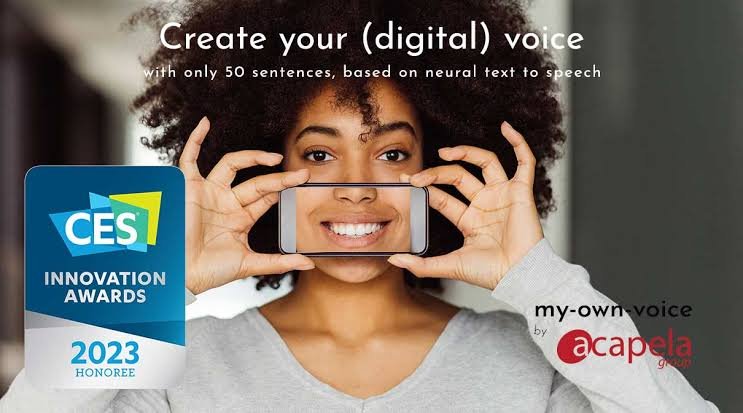
Beyond commercial enterprise applications, Acapela Group dedicates substantial engineering resources to medical accessibility and assistive technology. The organization developed the My-Own-Voice platform, a highly specialized technological framework engineered explicitly for Voice Preservation / Voice Banking.
This clinical application targets individuals diagnosed with progressive speech or language disorders—such as Amyotrophic Lateral Sclerosis (ALS), Primary Progressive Aphasia, or Multiple Sclerosis—who anticipate the gradual loss of their natural speaking abilities (dysarthria).
The My-Own-Voice architecture leverages the same proprietary Deep Neural Network (DNN) utilized in enterprise deployments, but it is heavily optimized for minimal data input. Patients are guided through a streamlined recording process, which requires the vocalization of approximately 50 specific sentences. This fractional dataset allows the neural engine to extract the fundamental acoustic blueprint, timbre, and phonetic identity of the individual.
Once processed, the system synthesizes a highly accurate, personalized digital voice model. This specialized audio asset is then securely exported for native integration into standard Augmentative and Alternative Communication (AAC) devices. This integration allows patients to communicate using a synthetic replication of their own natural voice rather than relying on a generic, pre-packaged robotic alternative, thereby preserving a critical element of their personal identity.
Inclusivity & Accessibility
Acapela Group allocates significant developmental resources toward mitigating communication barriers for individuals with visual, speech, and cognitive disabilities. By deploying Voice AI for Inclusivity / Accessibility, the organization ensures that diverse user demographics can interface with digital environments and maintain functional independence.
The accessibility framework is structurally integrated across several specialized hardware and software environments:
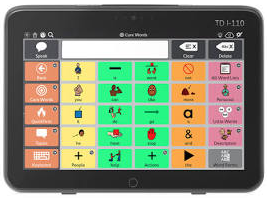
Tobii Dynavox AAC Hardware: As a subsidiary of Tobii Dynavox, the Acapela Group voice engine is deeply integrated into dedicated Augmentative and Alternative Communication (AAC) devices. For individuals diagnosed with congenital conditions such as autism or cerebral palsy, or progressive illnesses like ALS, these specialized touchscreen and eye-tracking terminals serve as primary communication conduits. The hardware natively incorporates the Acapela neural synthesis engine—including personalized outputs from the My-Own-Voice preservation platform—allowing users to communicate in real-time through an acoustic profile that accurately reflects their age, gender, and regional dialect.
NVDA Screen Reader Integration: To support the visually impaired community, the organization maintains a dedicated integration for the NonVisual Desktop Access (NVDA) screen reader operating on Microsoft Windows. The Acapela TTS Voices for NVDA architecture provides users with access to over 130 high-fidelity vocal models. This includes the specialized “Colibri” voice variants, which are algorithmically optimized to maintain strict phonetic intelligibility at extreme synthetic reading speeds, enabling rapid, non-visual desktop navigation without acoustic degradation.
Chromebooks and Digital Education: Targeting inclusive classroom environments, Acapela Group provisions a centralized text-to-speech extension directly within the Chrome Web Store. This deployment embeds over 100 distinct voices across 30 languages directly into Chromebook operating systems. Crucially, this integration includes access to highly specialized synthetic children’s voices, ensuring that pediatric users utilizing web-based educational applications can interact with an audio profile that matches their demographic identity rather than relying on standard adult vocal models.
Public Transport Automation
Acapela Group leverages its highly specialized Voice AI for Transport to automate clear, multilingual passenger information systems across complex global transit networks. In environments where real-time accuracy and acoustic intelligibility are critical—such as international airports, railway stations, and metropolitan subways—relying on static, pre-recorded audio files is fundamentally inefficient during sudden schedule delays, route disruptions, or emergency protocols.
By integrating the neural Acapela Group text-to-speech engine directly into the core transit infrastructure, operators can dynamically synthesize localized audio announcements 24/7 without requiring subsequent human studio recording sessions. The software suite utilizes an advanced lexicon editor to ensure the precise phonetic pronunciation of complex, regional station names and destinations across a broad spectrum of supported languages.
A premier enterprise application of this Acapela Group technology is actively deployed by the Berliner Verkehrsbetriebe (BVG), the primary public transport company in Berlin. To modernize its vast passenger information architecture spanning U-Bahn, tram, bus, and ferry networks, BVG utilized the neural synthesis framework to develop a unique, proprietary digital custom voice. This dedicated acoustic identity ensures that millions of daily commuters receive consistent, reliable, and instantly recognizable real-time audio guidance, significantly reducing traveler confusion during rapid transit adjustments.
Customer Interaction & IVR
High-volume customer contact centers and enterprise service networks require dynamic, scalable audio solutions to manage inbound inquiries efficiently. Traditional Interactive Voice Response (IVR) systems relying on static, pre-recorded audio prompts are fundamentally incompatible with modern, data-driven customer service strategies. Acapela Group engineers its neural text-to-speech framework to seamlessly integrate into complex Customer Interaction & IVR architectures, empowering enterprises to deploy sophisticated, real-time conversational AI.
The Acapela Group voice engine optimizes customer experience (CX) across several primary automated touchpoints:
Conversational AI and Call Centers: By leveraging the REST Cloud API or on-premise server deployments, enterprise call centers integrate natural, human-like synthetic voices directly into their telephony infrastructure. This allows advanced AI voicebots to instantly synthesize personalized, dynamic caller data—such as fluctuating account balances, appointment schedules, and complex alphanumeric tracking codes. The lifelike emotional prosody of the neural engine minimizes the cognitive load on the caller, significantly reducing caller frustration and call abandonment rates historically associated with legacy robotic IVR systems.
Self-Service Kiosks: Beyond centralized cloud telephony, the Acapela Group TTS engine drives audio guidance for localized self-service kiosks deployed across retail, banking, and quick-service restaurant (QSR) environments. Utilizing low-footprint edge SDK architectures, these interactive terminals can deliver secure, real-time navigational instructions and accessibility support without relying on continuous internet connectivity.
Omnichannel Customer Assistants: For digital-first brands, the voice engine is frequently embedded within mobile applications and web-based customer portals. This ensures that whether a customer is interacting with a voicebot over a traditional phone line, a digital avatar on a website, or a self-checkout kiosk in a physical store, they receive a unified, consistent auditory experience that reinforces the enterprise’s distinct voice branding.
Multilingual Capabilities & Expressive Audio
Acapela Group transcends basic robotic articulation by offering a highly localized acoustic footprint, synthesizing over 30 global languages and regional dialects. This extensive linguistic catalog allows global enterprises to deploy culturally accurate audio across decentralized international markets, maintaining consistent brand identity regardless of geographic location.
Beyond standard translation, the neural engine features sophisticated emotion-tuning capabilities. This acoustic flexibility allows AI voice models to dynamically adjust their emotional prosody—shifting seamlessly between an authoritative, professional tone for financial IVR systems, to an empathetic, reassuring tone for healthcare accessibility applications.
Advanced SSML & Proprietary "Voice Smileys" (Developer Syntax)
While standard text strings yield high-quality natural speech, enterprise developers can achieve granular acoustic control by injecting specialized Acapela SSML tags directly into the engine’s processing pipeline.
Using the proprietary TTS voice smileys syntax, developers can trigger highly realistic, non-verbal human sounds that bridge the gap between synthetic and biological speech. Audio tags such as #LAUGH01#, #CRY01#, or #COUGH01# are inserted directly into the text array, instructing the neural engine to emit natural vocalizations at exact intervals.
When dealing with proprietary corporate terms or irregular industry acronyms, developers bypass standard text normalization using the custom TTS phonetic pronunciation API. By applying the \prx="phonetic"\ tag, the engine outputs the exact required phonetic string. Similarly, the \pau=number\ tag forces the engine to hold silence for a specified duration in milliseconds, which is critical for pacing alphanumeric readouts like serial numbers or verification codes.
Security, Biometric Data Compliance & Sovereign Cloud Deployment
When deploying enterprise voice solutions, safeguarding user identity and acoustic data is as critical as the underlying neural technology. The following Security & Compliance FAQ is structured for direct integration into Elementor toggle widgets, providing clear, copy-ready answers for technical stakeholders and compliance officers.
Security & Compliance FAQ
How does Acapela Group ensure biometric data text to speech privacy? Acapela Group operates under strict adherence to GDPR Article 9, which legally classifies human voice recordings and acoustic characteristics as a special category of highly protected biometric data. Because a synthetic voice can uniquely identify a natural person, the organization ensures total biometric data text to speech privacy by requiring explicit, documented consent prior to any acoustic processing or neural ingestion.
What are the data retention and pseudonymization policies for GDPR compliant TTS? To maintain a fully GDPR compliant TTS architecture, Acapela Group enforces strict data minimization protocols. All backend telemetry, IP addresses, and device identifiers are actively pseudonymized during API requests to successfully decouple user identities from the generated audio. Furthermore, all inactive personal data and enterprise voice models are subject to automatic deletion from the central database after a maximum of 5 years of inactivity.
How does deployment architecture impact data sovereignty? For defense, financial, and healthcare sectors requiring absolute data isolation, Acapela Group offers Sovereign cloud voice AI alongside direct On-Premise SDK deployments. Unlike multi-tenant public cloud configurations, a sovereign cloud deployment guarantees that all text-to-speech processing occurs within geographically restricted, dedicated servers. This ensures that sensitive alphanumeric inputs and generated audio never cross international borders or interact with unauthorized third-party networks.
What measures protect individuals using the My-Own-Voice platform? Because the platform caters to medical patients banking their voice prior to losing their natural speech capabilities, My-Own-Voice data security is paramount. The platform leverages secure on-device processing and localized storage methodologies. This guarantees that a patient’s digital voice model remains fully under their personal control, completely isolated from unauthorized external access, public cloud vulnerabilities, or third-party commercial exploitation.
Acapela Group vs Competitors
Acapela Group operates within a highly competitive text-to-speech market. However, rather than competing solely on generative speed or raw cloud volume, the organization positions itself as a specialized provider for regulated enterprise environments, embedded systems, and inclusive accessibility.
Comparative Data Matrix
| Provider | Core Features & Focus | Pricing Model | Deployment Scale |
| Acapela Group | Custom voice branding, advanced phonetic APIs, offline Edge/IoT integration, AAC accessibility. | Enterprise licensing, tiered perpetual/subscription options based on deployment size. | Flexible: On-Premise, Edge SDKs, Sovereign Cloud, and multi-tenant Cloud APIs. |
| Google Cloud TTS | Multi-lingual breadth, deep Google Cloud ecosystem integration, Wavenet/Neural2 voices. | Pay-as-you-go per character, high-volume cloud usage discounts. | Highly centralized: Built for multi-tenant, massive-scale cloud integrations. |
| Amazon Polly | Scalable SaaS ecosystem, developer-friendly AWS API, robust multi-language neural TTS. | Pay-as-you-go per character, 12-month free tiers for scalable web development. | Massive global scale: Designed for rapid integration across the AWS architecture. |
| ElevenLabs | Rapid voice cloning, extreme emotional expressiveness, generative AI modeling. | Tiered SaaS subscriptions, minute/character-based quotas, PAYG options. | Agile cloud-first: Optimized for rapid content creation, gaming, and digital media. |
| Nuance (Microsoft) | Clinical speech recognition, deep enterprise IVR, conversational AI, healthcare documentation. | Custom enterprise contracts, highly dependent on Microsoft Azure ecosystem. | Enterprise dominant: Massive footprint in global healthcare networks and Fortune 500 contact centers. |
Factual Market Breakdown
Google Cloud Text-to-Speech
Google Cloud TTS dominates in pure linguistic breadth and raw cloud ecosystem synergy, offering seamless integration for developers already utilizing Dialogflow or the wider Google Cloud Platform (GCP). However, Google’s solution is inherently cloud-dependent. Acapela Group differentiates itself by prioritizing offline and on-premise strength. For critical infrastructure, edge IoT devices, or highly secure transit networks that cannot rely on continuous internet connectivity or third-party server uptime, Acapela’s lightweight embedded SDKs ensure that the text-to-speech engine continues to generate flawless local audio natively without any external ping.
Amazon Polly
Amazon Polly is the standard for high-volume, scalable SaaS models, allowing massive web applications to quickly deploy text-to-speech through highly cost-effective, pay-as-you-go cloud architectures. While Polly excels at generalized scale, Acapela Group counters with proprietary language customization. Acapela engineers work directly with enterprise developers to meticulously craft highly specific acoustic lexicons—ensuring the engine perfectly pronounces proprietary corporate terminology, niche industry jargon, or complex regional dialects that Amazon’s generalized SaaS engine often misinterprets or normalizes incorrectly.
ElevenLabs
ElevenLabs has aggressively disrupted the creative market with its rapid generative AI modeling, providing unparalleled emotional expressiveness and near-instant voice cloning for content creators and gaming developers. In contrast, Acapela Group operates within a highly regulated, compliance-driven framework. Where ElevenLabs optimizes for rapid, creative output across the open web, Acapela strictly enforces GDPR biometric data protocols, secure neural ingestion workflows, and data sovereignty. This makes Acapela the required choice for financial institutions, defense sectors, or healthcare providers where rapid, unregulated generative AI introduces unacceptable legal and compliance risks.
Nuance Communications (Microsoft)
Backed by Microsoft’s enterprise infrastructure, Nuance Communications is the undisputed leader in specialized healthcare documentation and massive Fortune 500 interactive voice response (IVR) arrays. While Nuance focuses heavily on clinical speech recognition and enterprise AI integration, Acapela Group maintains a distinct competitive moat through its specialized inclusivity and AAC (Augmentative and Alternative Communication) footprint. Through clinical platforms like My-Own-Voice and deep hardware integrations with Tobii Dynavox, Acapela dedicates its neural engineering specifically toward giving a custom, preserved voice to individuals facing progressive speech loss—operating in an assistive technology sphere that generalized enterprise platforms rarely penetrate.
Acapela Group Notable Clients
To establish market authority in enterprise text-to-speech, raw technological capability must be validated by real-world deployment. Acapela Group’s neural infrastructure is deeply integrated into the operational ecosystems of global leaders across the public transport, healthcare, and assistive technology sectors. The following technical implementations highlight the engine’s capacity to manage massive operational scale, strict compliance, and specialized hardware.
Tobii Dynavox
As the parent company of Acapela Group, Tobii Dynavox represents the most sophisticated hardware integration of the text-to-speech neural engine. Tobii Dynavox is the global leader in Augmentative and Alternative Communication (AAC) hardware, engineering specialized speech-generating devices for individuals with conditions such as ALS, cerebral palsy, and autism.
Technical Implementation: The Acapela neural TTS engine operates completely offline via embedded SDKs directly on Tobii Dynavox devices, such as the TD I-110 and the iPad-based TD Pilot. This ensures users have instantaneous, lag-free speech generation without requiring Wi-Fi. Furthermore, the engine natively parses inputs from Tobii’s world-class eye-tracking hardware, instantly converting eye-gaze selections into natural, highly intelligible speech. This integration heavily leverages the My-Own-Voice banking platform, allowing users to communicate through their own preserved vocal identity rather than a default system voice.
BVG (Berliner Verkehrsbetriebe)
Managing the primary public transport network for the German capital, BVG handles millions of daily commuters across a sprawling U-Bahn (subway), tram, bus, and ferry infrastructure. Relying on pre-recorded audio snippets was inefficient for a dynamic transit grid requiring constant real-time updates.
Technical Implementation: BVG partnered with the Acapela Voice Factory to develop a proprietary, custom digital voice. This custom acoustic model is deployed across the BVG digital infrastructure using Acapela’s Voice AI for Transport architecture. By utilizing advanced custom lexicons and deep phonetic tuning, the engine dynamically synthesizes perfectly pronounced local station names, detour information, and real-time schedule disruptions. This ensures that a localized, consistent brand voice guides Berlin’s commuters reliably, even during emergency schedule changes.
SNCF & Deutsche Bahn
Europe’s premier railway networks—France’s SNCF and Germany’s Deutsche Bahn (DB)—require immense architectural scalability to manage passenger information systems across thousands of active transit hubs simultaneously.
Technical Implementation: Both organizations abandoned legacy automated systems in favor of Acapela’s enterprise transport solutions to achieve real-time, multilingual audio synchronization. For Deutsche Bahn, Acapela engineered a dedicated DB custom voice that is actively deployed in all train stations, reaching over 21 million travelers and station visitors daily. The deployment relies heavily on Acapela’s centralized lexicon editor, allowing transit engineers to enforce the precise phonetic pronunciation of complex international city names, technical transit terminology, and multi-language safety protocols at a massive scale.
AssistiveWare
AssistiveWare is a pioneering developer of software-based AAC solutions, most notably the Proloquo2Go and Proloquo4Text applications for the Apple iOS and iPadOS ecosystems.
Technical Implementation: Rather than relying solely on default operating system voices, AssistiveWare directly embeds Acapela Group’s high-fidelity voices into its applications at no extra cost to the end-user. This deployment is crucial for pediatric inclusivity; Acapela provides genuine, age-appropriate children’s voices to the Proloquo suite, allowing non-verbal children to communicate with a voice that matches their actual demographic. Additionally, the AssistiveWare architecture fully supports Acapela’s My-Own-Voice output, giving iOS users seamless access to their banked digital voices across all compatible Apple touchscreen and switch-control accessibility interfaces.
Frequently Asked Questions (FAQs) About Acapela Group
What is Acapela Group?
Acapela Group is a European leader in digital voice solutions and text-to-speech (TTS) technology. With over 30 years of acoustic expertise, they develop AI-driven, natural-sounding synthetic voices for enterprise solutions, public transport networks, accessibility devices, and consumer electronics.
How does Acapela Text-to-Speech (TTS) work?
Acapela TTS transforms written text into natural-sounding speech in real-time. Using Deep Neural Networks (DNN), the engine processes linguistic rules, phonetic dictionaries, and acoustic models to generate synthetic speech that accurately reflects human intonation, emotion, and natural pauses.
Can individuals buy Acapela voices for personal use?
Acapela Group primarily operates in the B2B sector, providing enterprise licensing and developer SDKs. However, individuals can access Acapela voices through specific consumer applications, such as the Acapela TTS Voices app on Google Play, or via assistive technology software partners like AssistiveWare and Tobii Dynavox.
What is “My-Own-Voice” by Acapela Group?
“My-Own-Voice” is a clinical voice banking and preservation platform designed for individuals diagnosed with speech-impairing conditions (like ALS or aphasia). By recording as few as 50 sentences, the platform uses AI to create a digital replica of the user’s natural voice for use in augmentative and alternative communication (AAC) devices.
Can I use Acapela voices on Android or iOS?
Yes. Acapela provides a dedicated Acapela TTS Voices app on the Google Play Store, allowing Android users to integrate high-quality voices into system-level TTS apps like screen readers and GPS. While Apple’s iOS ecosystem restricts system-wide TTS engine replacement, Acapela voices are natively integrated into specific iOS accessibility applications, such as Proloquo2Go.
What is the Acapela TTS Voices add-on for NVDA?
NVDA (NonVisual Desktop Access) is a free, open-source screen reader for Windows. The Acapela TTS Voices add-on allows visually impaired users to enhance NVDA with over 130 high-quality, natural-sounding Acapela voices, significantly improving the desktop screen reading experience.
What is the difference between Acapela Colibri and HQ voices?
In the context of screen readers and accessibility tools, High-Quality (HQ) voices are designed for maximum naturalness and vocal clarity. Colibri voices are highly optimized, lightweight variants engineered specifically to handle extreme reading speeds without phonetic degradation, making them ideal for power users who rely on rapid auditory navigation.
How can I create a custom AI voice for my company?
Acapela offers a specialized “Voice Branding” service for enterprises. A company selects a voice talent, records a fractional audio dataset in a studio, and Acapela’s neural engine maps the acoustic blueprint. This creates a proprietary, exclusive digital voice persona for use in corporate IVRs, Voicebots, and public transport announcements.
Are Acapela’s AI voices GDPR compliant?
Yes. Acapela Group strictly complies with European GDPR regulations, explicitly treating human voice recordings as protected biometric data. They require documented consent for voice cloning, enforce strict data minimization, actively pseudonymize backend API telemetry, and automatically delete inactive personal data after 5 years.
What industries use Acapela Text-to-Speech?
Acapela’s technology is heavily utilized across four primary sectors: Public Transportation (automated passenger announcements and wayside systems), Healthcare & Accessibility (AAC devices, screen readers), Consumer Electronics (automotive IoT, smart toys), and Enterprise Customer Service (conversational AI, finance IVR systems).
Acapela Group Leadership Team:
Acapela Group Profile Structure:
Name: Acapela Group (Acapela Group Babel Technologies SA)
Industry: Technology / Business & Productivity Software (Specializing in Voice AI, Speech Synthesis, and Text-to-Speech solutions)
Founded: 2003 (Roots tracing back to Babel Technologies and earlier 1990s TTS research; Acapela Transport launched as a dedicated organization in 2014)
Founders: Thierry Dutoit (Co-founder, Babel Technologies/Acapela Group)
CEO: Rémy Cadic
Headquarters Address: Boulevard Dolez 33, 7000 Mons, Belgium (Registered Office: Rue du Crossage 2a, 7012 Mons, Belgium)
Global Footprint: Headquartered in Belgium, with key office locations in Labège Cedex (Toulouse), France, and Stockholm, Sweden. Operates globally within the Tobii Dynavox network across 65+ countries.
Ownership Structure: Fully owned subsidiary of Tobii Dynavox AB (publ) / Dynavox Group (acquired in April 2022). Tobii Dynavox is a publicly traded company on Nasdaq Stockholm (Ticker: DYVOX).
Total Funding & Stage: Acquired. (Prior to acquisition, Acapela Group raised approximately $3.0M and successfully completed a partial management buyout in 2015).
Annual Revenue: ~$6M EUR / ~$6.5M USD (Standalone Acapela Group turnover reported at the time of the 2021/2022 acquisition). Tobii Dynavox (Parent Company) reported Q2 2025 revenues of SEK 603 million (~$58M USD).
Number of Employees: ~50 to 90 employees (Standalone Acapela Group). Tobii Dynavox (Parent Company) employs over 1,060 people worldwide.
Target Audience: Enterprise B2B sector, public transportation networks, consumer electronics manufacturers, hardware engineers, and developers of accessibility/assistive technologies.
Core Product Lines:
Custom Voice Creation (Voice Branding & Digital Voice Personas)
My-Own-Voice (Clinical voice banking for speech preservation)
Embedded Linux/Edge SDKs for offline TTS
Cloud REST APIs for streaming audio & IVR
Public Transport Automation Audio
Key OEM Partnerships & Integrations: Tobii Dynavox (AAC devices), AssistiveWare (Proloquo2Go on iOS/Mac), NVDA (Windows Screen Readers), BVG (Berlin Transport), SNCF, Deutsche Bahn.
Regulatory Clearances & Certifications: GDPR Compliant (treats voice recordings as protected biometric data under Article 9). Parent company Tobii Dynavox maintains ISO 9001 certification.
NAICS and SIC Codes: NAICS: 334111 (Electronic Computer Manufacturing – via parent company hardware integration), 511210 / 513210 (Software Publishers).
Website: acapela-group.com